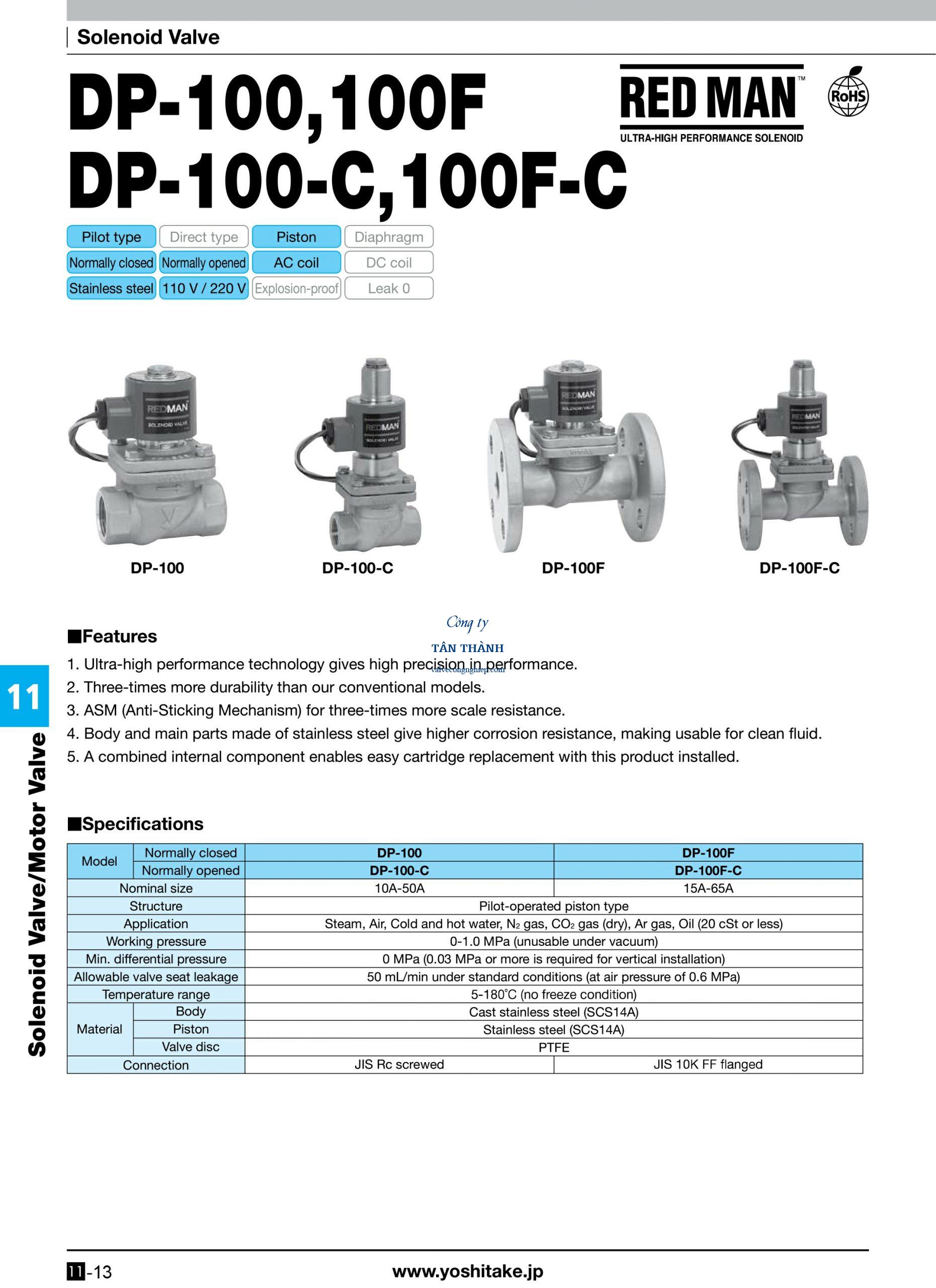
SOLENOID VALVE DP-100 YOSHITAKE
Mã sản phẩm: N/A
Connection: Threaded ends
Operation: Electric
Valve Type: Solenoid valve
Brand: Yoshitake
Material: Cast steel
Origin: Japan
Have you heard about the DP-100 Yoshitake solenoid valve? This solenoid valve is currently making waves in the Vietnamese market. Join Tan Thanh Industrial Equipment Company to explore the DP-100 Yoshitake valve.
Product specifications of Solenoid Valve DP-100
- BRAND: YOSHITAKE
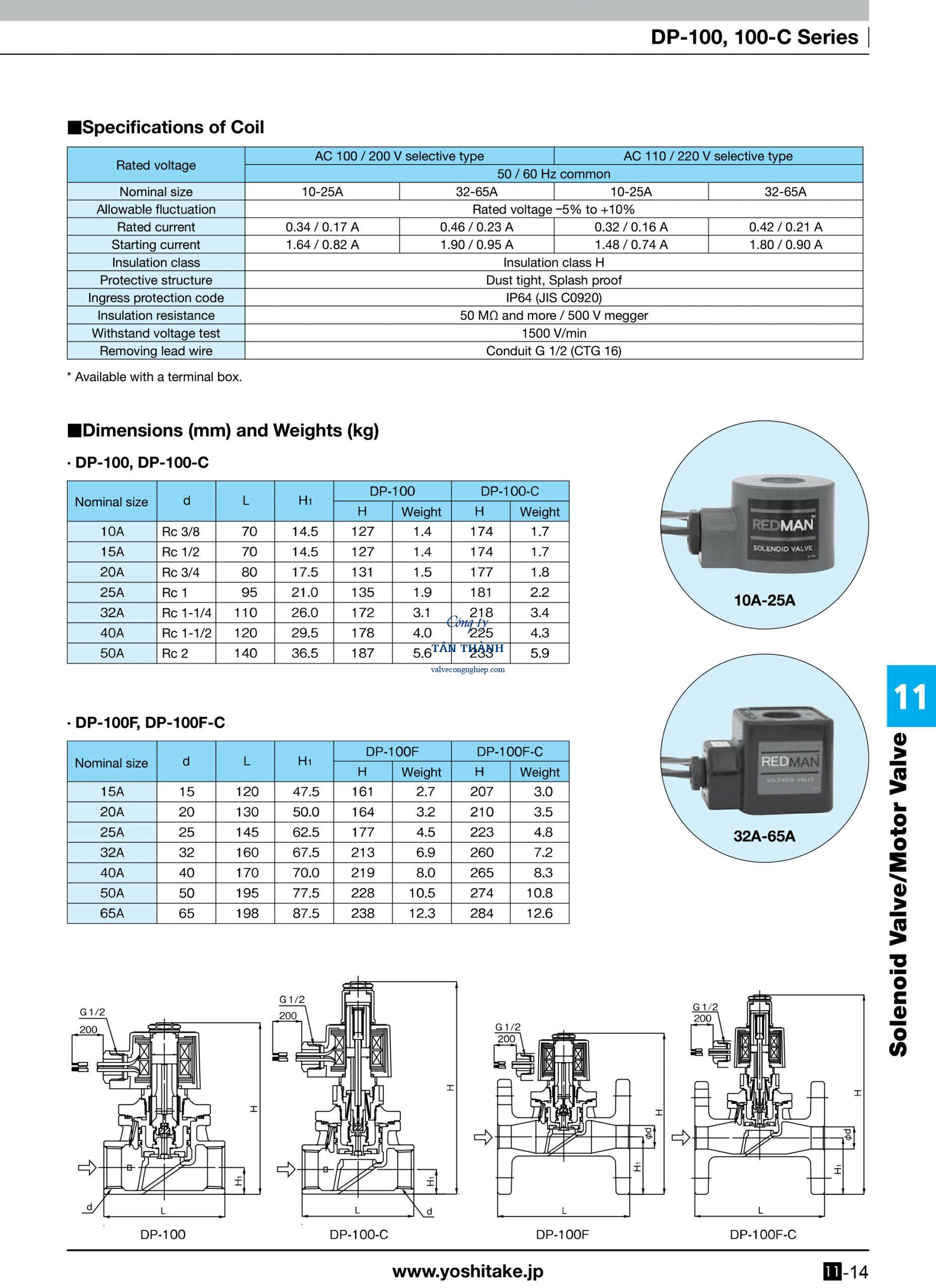
- Size: DN10 – DN50
- Feature: Piston type / AC / Pilot-operated / Normally closed / Stainless steel / Screwed
- Category: Solenoid valve
- Type: Piston type
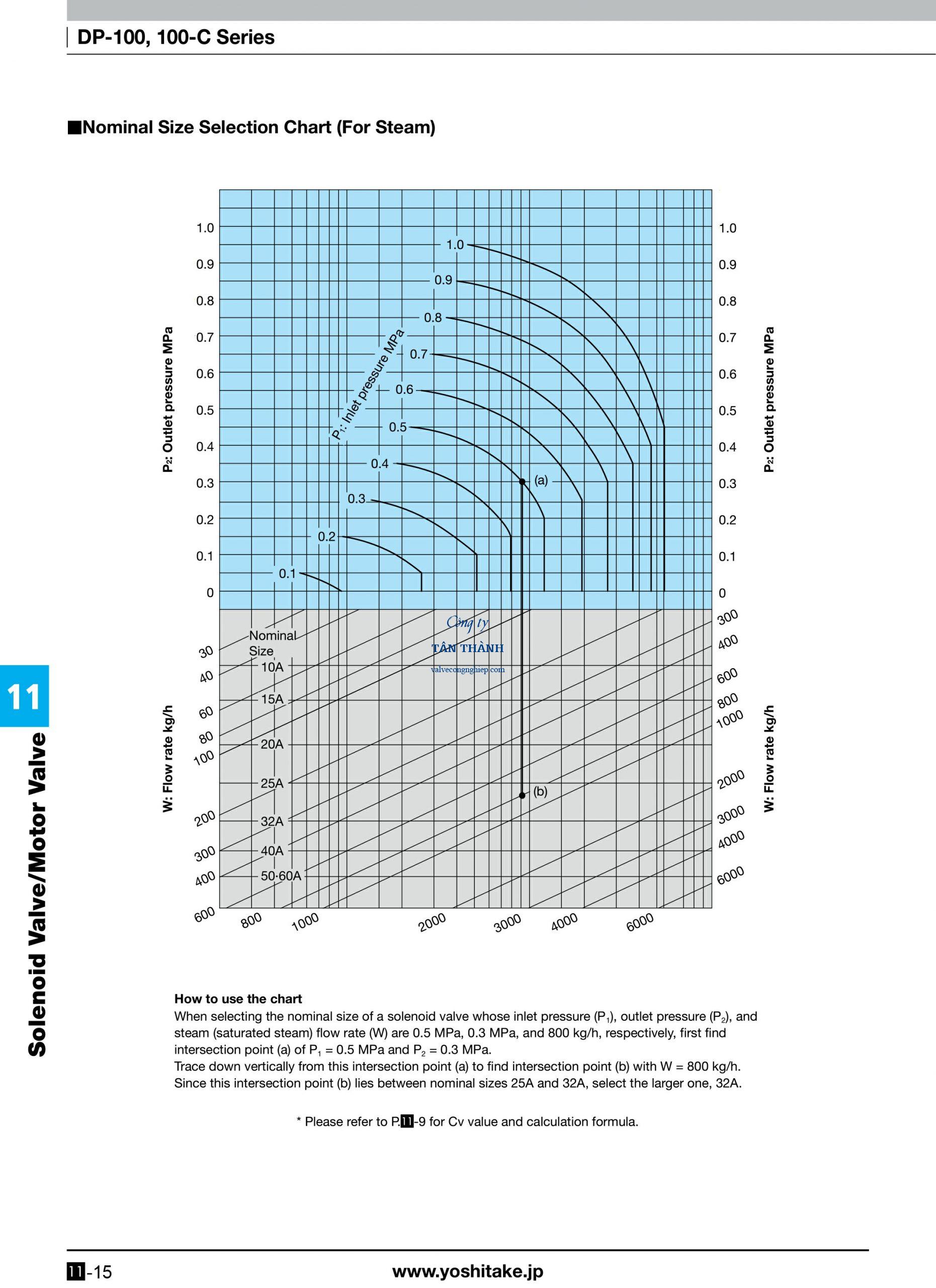
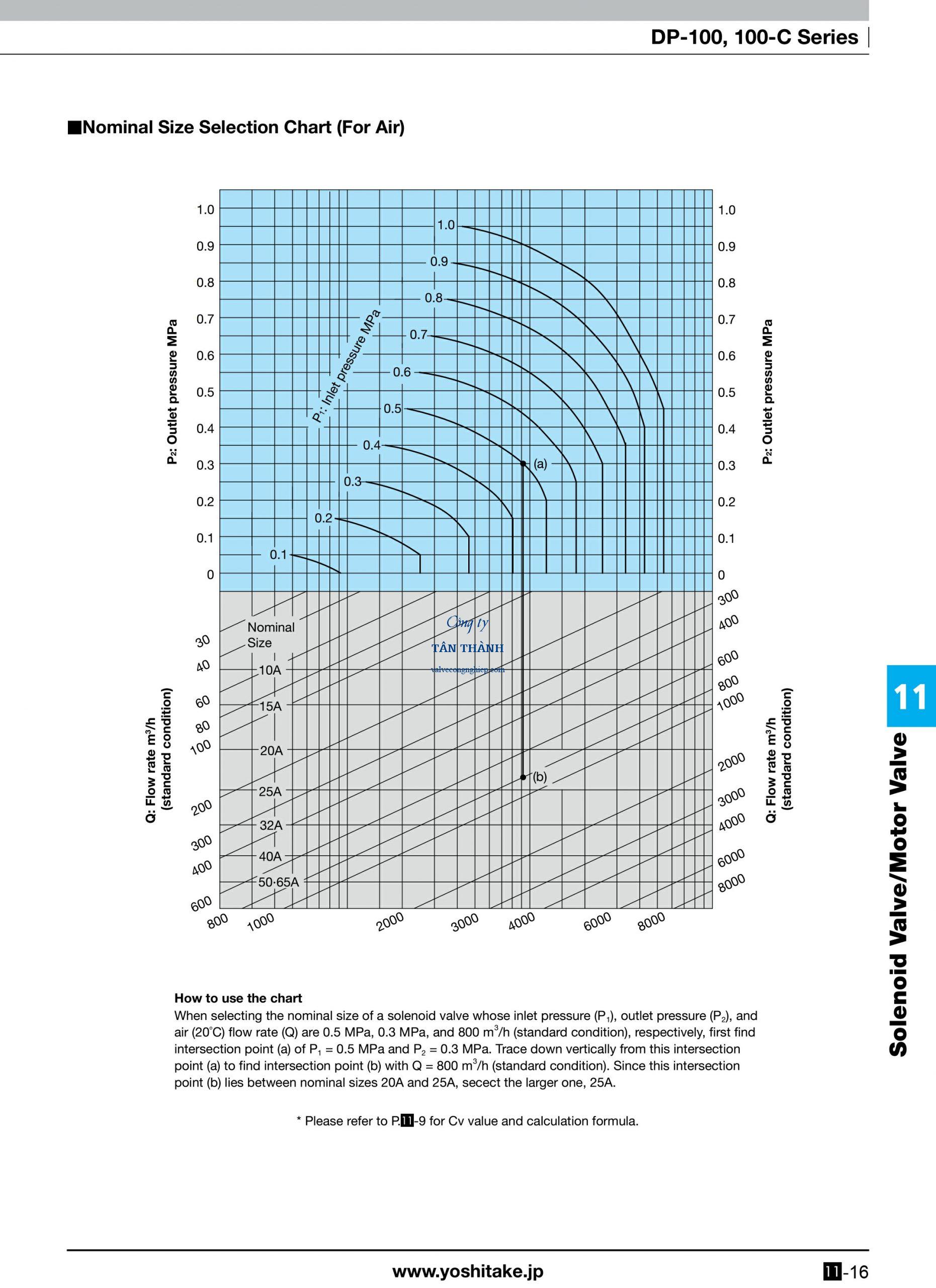
- Application: Steam , Air , Cold and hot water , N2 gas , Co2 gas (dry)
- Working Pressure: 0 – 1.0MPa(“Unusable under vacuum”)
- Min. Differential Pressure: 0 MPa (0.03 MPa or more is required for vertical installation)
- Max. Temperature: 180 degree (C) (no freeze condition)
- Rated Voltage: AC 100 / 200 V selective type – 50 / 60 Hz common
- Allowable Valve Seat Leakage: 50 mL/min under standard conditions (at air pressure of 0.6 MPa)
- Operation: Normally closed
- Connection: JIS Rc screwed
- Body: Cast stainless steel
- Piston: Stainless steel
- Valve Disc: PTFE
- Gasket: PTFE
Van điện từ ở đâu bán chính hãng, giá rẻ, bảo hành 365 ngày – Đến ngay van công nghiệp Tân Thành nhé.